Most AI SEO tool comparisons list features and monthly prices and call it a day. That tells you almost nothing. What you actually need to know is: how much does it cost to get one published, optimized article out the door? And does the tool even cover the channels your buyers are using?
Here's what every other guide misses. If your AI SEO tool only tracks Google rankings, you're measuring half the picture. Google AI Overviews now appear on 30%+ of search results. ChatGPT processes over 150 million queries per week. Your potential customers are researching products in AI chat interfaces right now. The best AI SEO tools in 2026 need to handle both traditional rankings and AI citation visibility. Most don't.
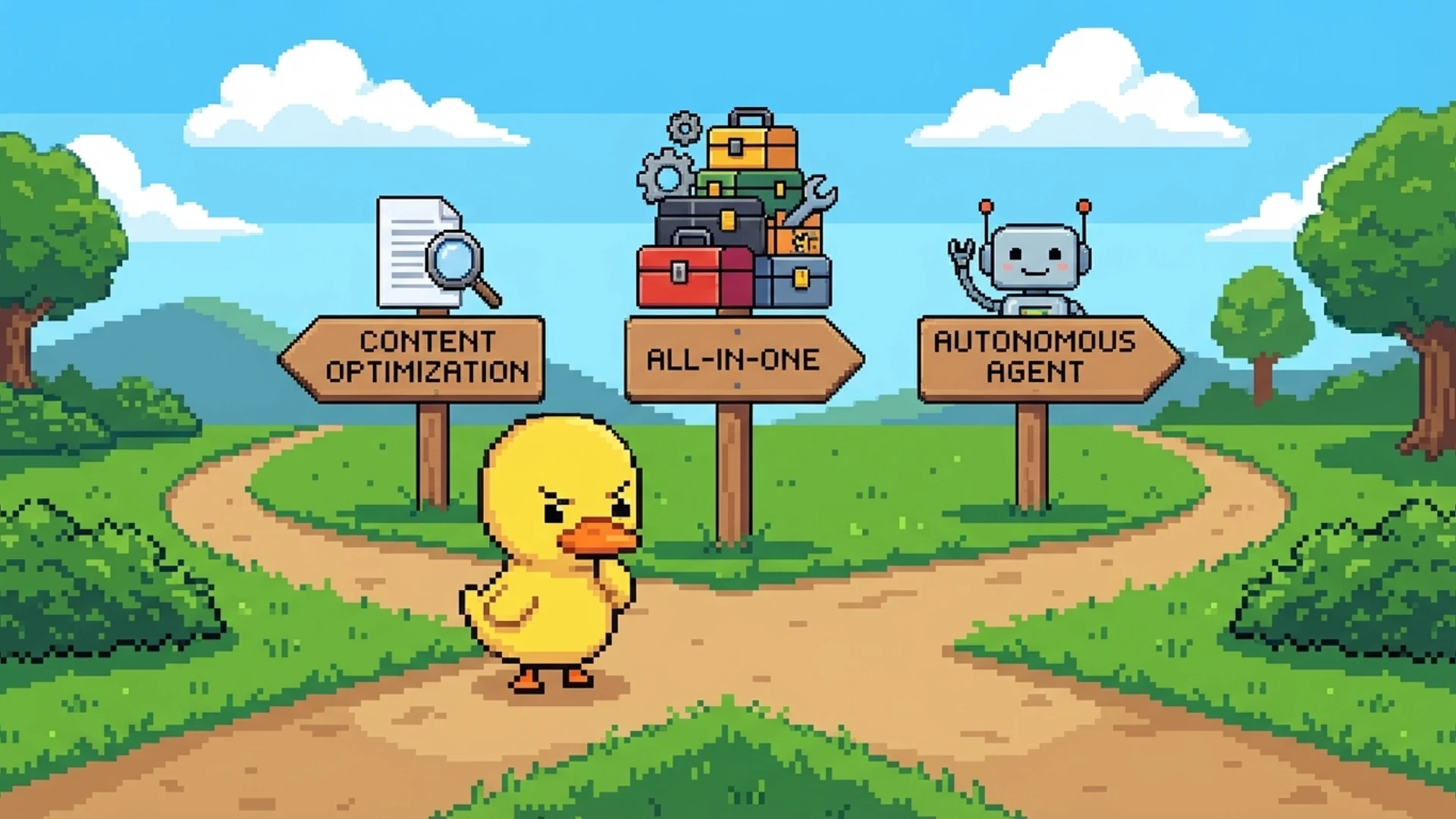
AI SEO tools fall into five categories: content optimization (SurferSEO, Frase), all-in-one platforms (Semrush, Ahrefs), AI generators (Jasper, Search Atlas), GEO trackers (Otterly, Profound), and autonomous agents (Duqky). You probably need 2-3 tools, not one do-everything platform. Budget $100-500/mo for tools, or $50-500/mo for an autonomous agent that replaces the tools and the team. Cost per article ranges from $39-54 (SurferSEO) to $3-8 (autonomous agents).
What You'll Learn
- The five categories of AI SEO tools and which gap each one fills
- Real cost-per-article math, not just monthly subscription prices
- The GEO/AI visibility tracking category most guides don't mention
- Where each tool falls on the spectrum from AI-assisted to fully autonomous
- How to evaluate tools for both Google rankings and ChatGPT/Perplexity visibility
- A simple framework for choosing the right tools based on your team size and budget
Five categories of AI SEO tools
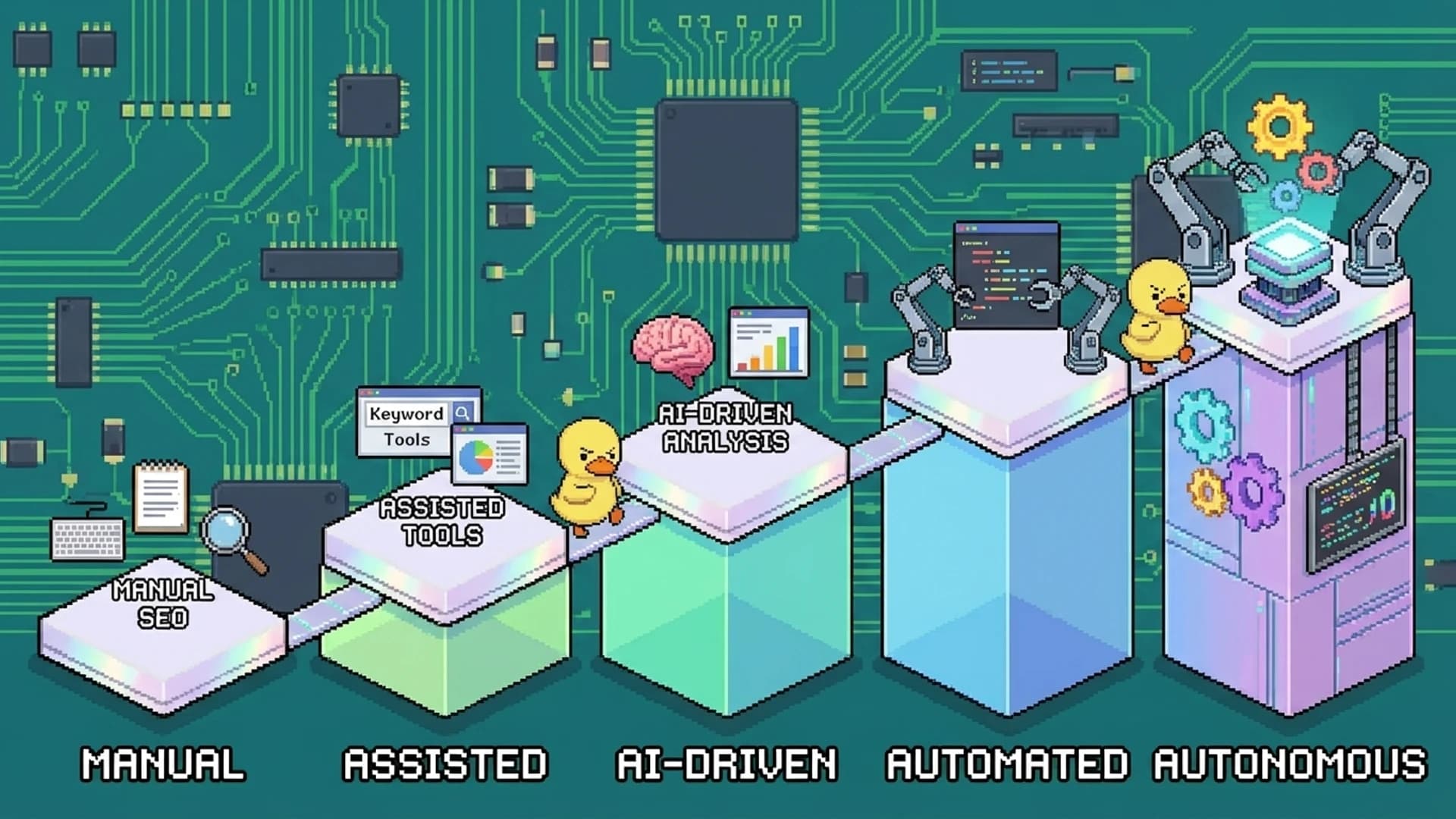
The AI SEO market has split into five categories. Understanding these matters more than comparing individual features. The right category depends on your team size, your budget, and how much of the SEO process you want to own versus hand off.
- Content optimization tools: AI editors that score and improve your writing against top-ranking pages (SurferSEO, Frase, Clearscope)
- All-in-one SEO platforms: traditional suites with AI features added on (Semrush, Ahrefs, SE Ranking)
- AI content generators: tools built to produce SEO content at volume (Jasper, Search Atlas)
- AI visibility/GEO trackers: the newest category, tracking your citations in ChatGPT, Perplexity, and AI Overviews (Otterly, Profound, Scrunch AI)
- Autonomous AI agents: end-to-end platforms that handle the full pipeline from research to publishing (Duqky)
Here's a distinction nobody talks about: how much of your time does the tool still need? Most "AI SEO tools" are really AI-assisted tools. They speed up specific tasks but you're still driving every step. On the other end are fully autonomous agents that handle research, writing, optimization, and publishing with minimal input. If you have a content team, AI-assisted tools add real value. If you're a SaaS founder doing SEO solo, autonomous agents save you from hiring 2-3 people.
Content optimization and all-in-one platforms
SurferSEO
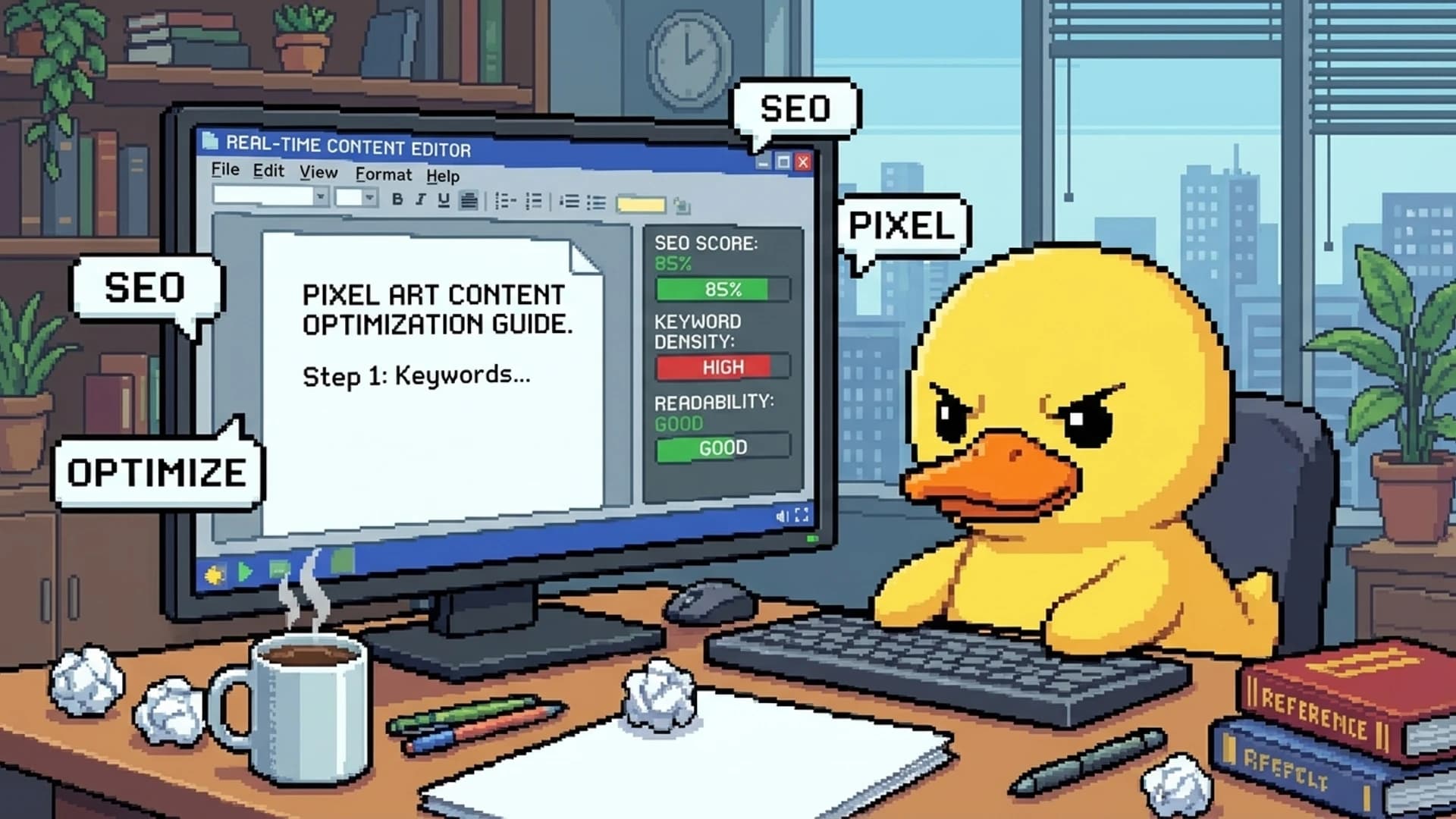
The strongest content optimization tool on the market right now. You write in its Content Editor, and it scores your piece in real time against what's already ranking. Surfer AI can generate full articles that score well out of the box. Where it shines: on-page optimization scoring and NLP keyword suggestions. Where it doesn't: no keyword research, no publishing, no technical SEO. You still need other tools for everything outside the writing phase. Pricing: $99-249/mo plus $29 per AI article. At 10 articles a month, you're looking at about $39-54 per optimized piece.
Frase
Frase bundles content briefs, SERP analysis, and AI writing into one workflow. It's especially good at generating comprehensive briefs by analyzing what top-ranking pages cover. Main advantage over SurferSEO: better briefs at a lower price. Main disadvantage: the AI writing quality is a step below Surfer AI. Pricing: $15-115/mo plus $35/mo for AI. Best value in the content optimization category. Cost per article: $4-38 depending on volume.
Semrush and Ahrefs
You buy Semrush for the data. Their AI features (ContentShake AI) are solid add-ons, not the core value. Semrush is the market leader in comprehensive SEO data, and their AI integrations keep getting better. Pricing: $139-499/mo plus $60/mo for ContentShake. Ahrefs has the best backlink database and arguably the best keyword difficulty scores. Their AI approach is more conservative, focused on keyword clustering and content gap analysis rather than full article generation. Pricing: $129-449/mo. If you mainly need data with light AI help, Ahrefs is the stronger pick.
GEO tracking: the category everyone misses
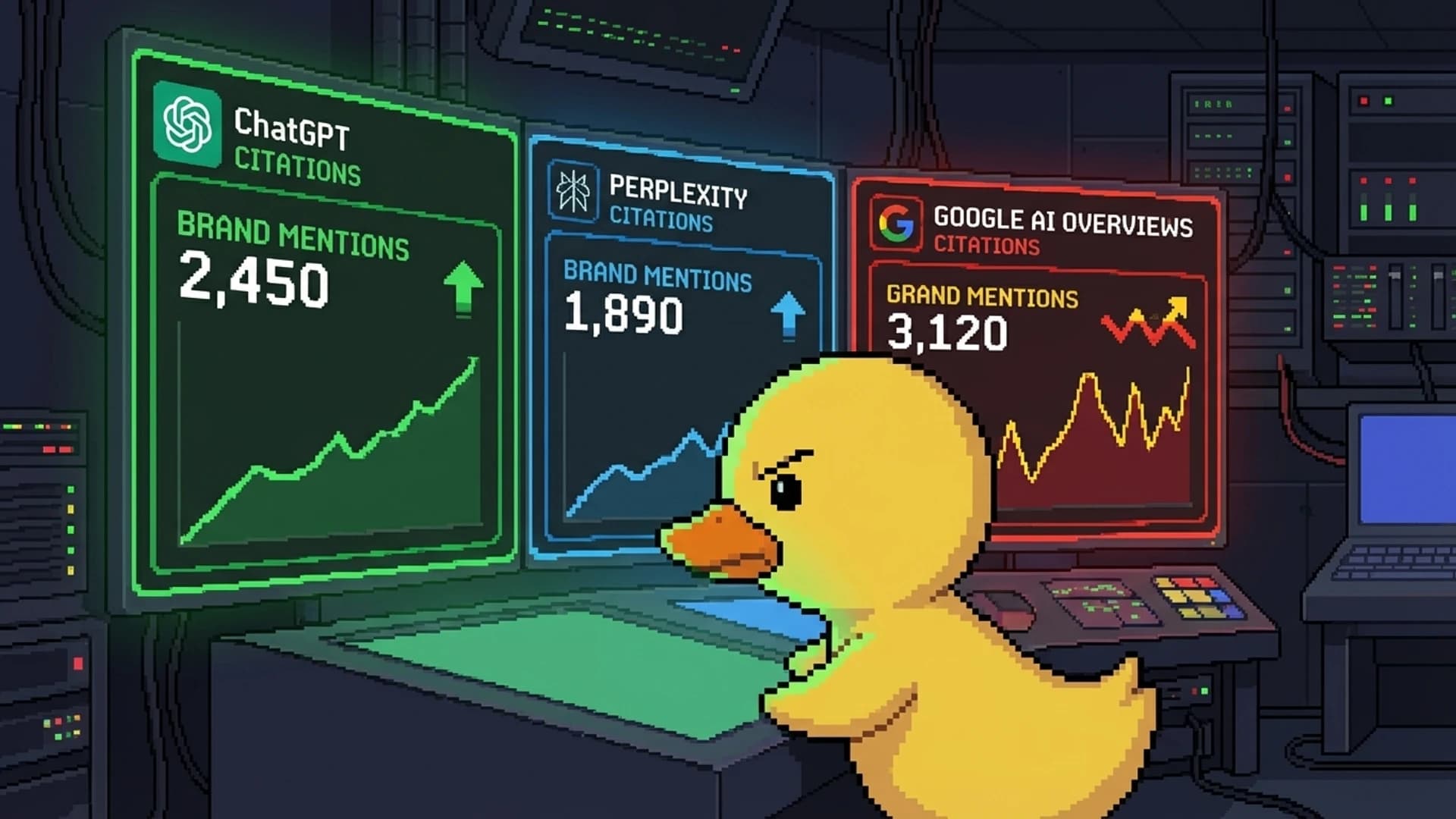
This is the category every other comparison guide skips. AI search engines process hundreds of millions of queries per week, and a new class of tools has popped up to track whether your brand shows up in those AI-generated results. If you're only tracking Google rankings in 2026, you're seeing half the picture.
Otterly.ai tracks your brand mentions and citations across ChatGPT, Perplexity, Google AI Overviews, and other AI engines. It shows you which queries trigger responses that mention your brand, which competitors get cited instead, and how your AI visibility trends over time. For SaaS companies where buyers increasingly use AI tools to research products, knowing whether ChatGPT recommends you is critical. Profound focuses on AI Overview tracking specifically. Scrunch AI takes a broader multi-engine approach with competitive benchmarking.
Free GEO monitoring
You don't need a paid tool to start. Search your brand name and key product queries in ChatGPT, Perplexity, and Google (check for AI Overviews) once a month. Track results in a spreadsheet. It's tedious but it gives you baseline data before investing in a paid tracker.

Autonomous AI agents: the end of the tool stack
Autonomous agents are a fundamentally different approach. Instead of giving you better tools to do SEO manually, agents handle the whole pipeline: keyword research, competitive analysis, content briefs, writing, QA, image generation, optimization, publishing, internal linking, and performance monitoring. You set the strategy and approve outputs. The agent handles execution.
The most effective platforms use multi-agent architecture. That means specialized AI agents for different parts of the process instead of one general-purpose AI trying to do everything. A content agent handles keyword research and article creation. An outreach agent manages backlink prospecting. A technical agent runs site audits. Each one has domain-specific training and workflows. This is how duqky works: an AI marketing team that coordinates but operates independently. Why does this matter? Because SEO isn't one skill. It's at least three. A single AI trying to do all three produces mediocre results across the board.

See how duqky's AI marketing team handles the full SEO pipeline, from keyword research to published, optimized articles, without you opening a single tool.
See how it works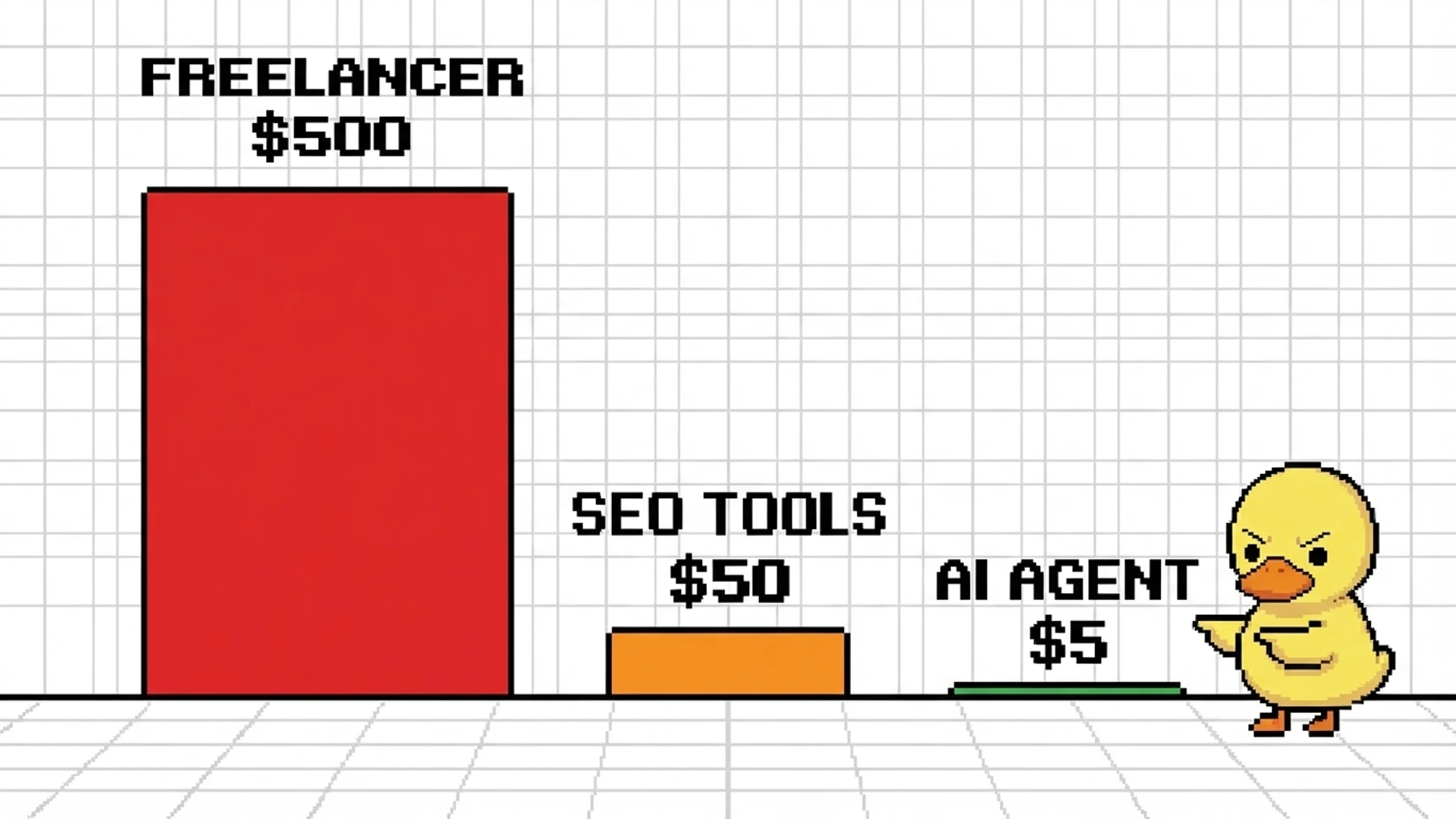
Cost-per-result comparison
Monthly subscription prices are meaningless without context. What you need is cost per result: specifically, cost per published, optimized article when you factor in all costs including your time. Here's how the numbers actually break down.
- Freelance writer + manual SEO: $300-800 per article (writer fee + 3-5 hours of your time for keyword research, briefing, editing, publishing, internal linking)
- SurferSEO + AI writing: $39-54 per article (subscription + per-article fee), plus 1-2 hours of your time per piece
- Frase: $4-38 per article depending on plan volume, plus 1-2 hours of your time per piece
- Semrush + ContentShake AI: ~$50-80 per article when you factor in both subscriptions and manual workflow overhead
- Jasper + SurferSEO: $55-75 per article (combined subscriptions amortized), plus 30-60 min editing per piece
- Autonomous AI agent (Duqky): $3-8 per article (credit-based, covers research + writing + images + publishing), plus 10-15 min approval time
The hidden cost most comparisons ignore
Every tool that requires you to manage the workflow has a hidden cost: your time. If you spend 2 hours per article on keyword research, briefing, editing, and publishing, and your time is worth $100/hour, that's $200 per article in hidden cost. No tool subscription can offset that. For SaaS founders, time cost often exceeds tool cost by 5-10x.
How to choose: a framework for SaaS founders
Forget feature matrices. Three questions narrow your choice to the right category in 60 seconds.
- Do you have a content team? If yes, invest in better tools for them: Semrush or Ahrefs for data, SurferSEO or Frase for optimization. If no, skip the tools entirely and go straight to an autonomous agent.
- Do you care about AI search visibility? If yes, add a GEO tracking tool (Otterly, Profound) regardless of what else you use. If no, you're ignoring the fastest-growing search channel. Reconsider.
- What's your monthly SEO budget? Under $100: Frase + Google Search Console + manual work. $100-300: SE Ranking or SurferSEO + a GEO tracker. $300+: Autonomous agent (Duqky) or Semrush + SurferSEO + GEO tracker.
The bottom line
- Best for content optimization: SurferSEO. Real-time scoring is unmatched.
- Best for SEO data: Ahrefs (backlinks) or Semrush (broader marketing data)
- Best budget all-in-one: SE Ranking. 80% of Semrush at 40% of the price.
- Best for content briefs: Frase. Strongest brief generation at the lowest price.
- Best for AI visibility tracking: Otterly.ai. First mover in a critical new category.
- Best for autonomous SEO execution: Duqky. Multi-agent architecture handles the full pipeline.
- Best free starting point: Google Search Console + Ahrefs Webmaster Tools + ChatGPT
Frequently asked questions
Depends on what you need. For content optimization scoring, SurferSEO leads. For comprehensive SEO data, Semrush. For fully autonomous execution, Duqky handles the entire pipeline. For tight budgets, Frase or SE Ranking offer strong value. The best approach for most people is 2-3 specialized tools rather than one platform trying to do everything.
AI can replace most SEO execution. Keyword research, content writing, technical audits, internal linking, rank monitoring. All automatable today. What AI can't replace is strategy, brand positioning, and creative differentiation. The best results come from you setting the direction and AI handling the work. Think of it as replacing the team's hands, not their brain.
For most SaaS companies, absolutely. A freelance writer producing 5 articles per month costs $1,500-4,000. An AI agent producing 15-20 articles per month costs $150-500 in credits. Even accounting for review time, that's 3-4x more output at 50-80% lower cost. The compound effect on organic traffic over 6-12 months makes AI SEO one of the highest-ROI investments for early-stage SaaS.
Google Search Console. It's the best free SEO tool, period. Authoritative ranking data straight from Google. Ahrefs Webmaster Tools (free for sites you own) adds site audit and backlink data. ChatGPT's free tier handles content outlines and meta descriptions. For AI visibility, manually searching your brand in ChatGPT and Perplexity is free but time-consuming.
Most traditional tools (SurferSEO, Semrush, Ahrefs) don't track AI visibility at all. They focus on Google rankings only. A new category of GEO tracking tools (Otterly, Profound, Scrunch AI) specifically monitors AI citation visibility. Autonomous agents like Duqky optimize your content structure for both Google and AI citations by building in FAQ sections, direct-answer formatting, and schema markup from the start.
Budget $100-500/mo for a tool stack, or $50-500/mo for an autonomous agent that replaces most of that stack. But the number that actually matters isn't your monthly bill. It's your cost per published, optimized article. Factor in your time: 2 hours per article at $100/hour is $200 in hidden cost that no subscription can offset.

duqky's AI marketing team handles content, outreach, and technical SEO autonomously. Start free with 500 credits. That's enough to publish your first batch of optimized articles and see the pipeline in action.
Get started free