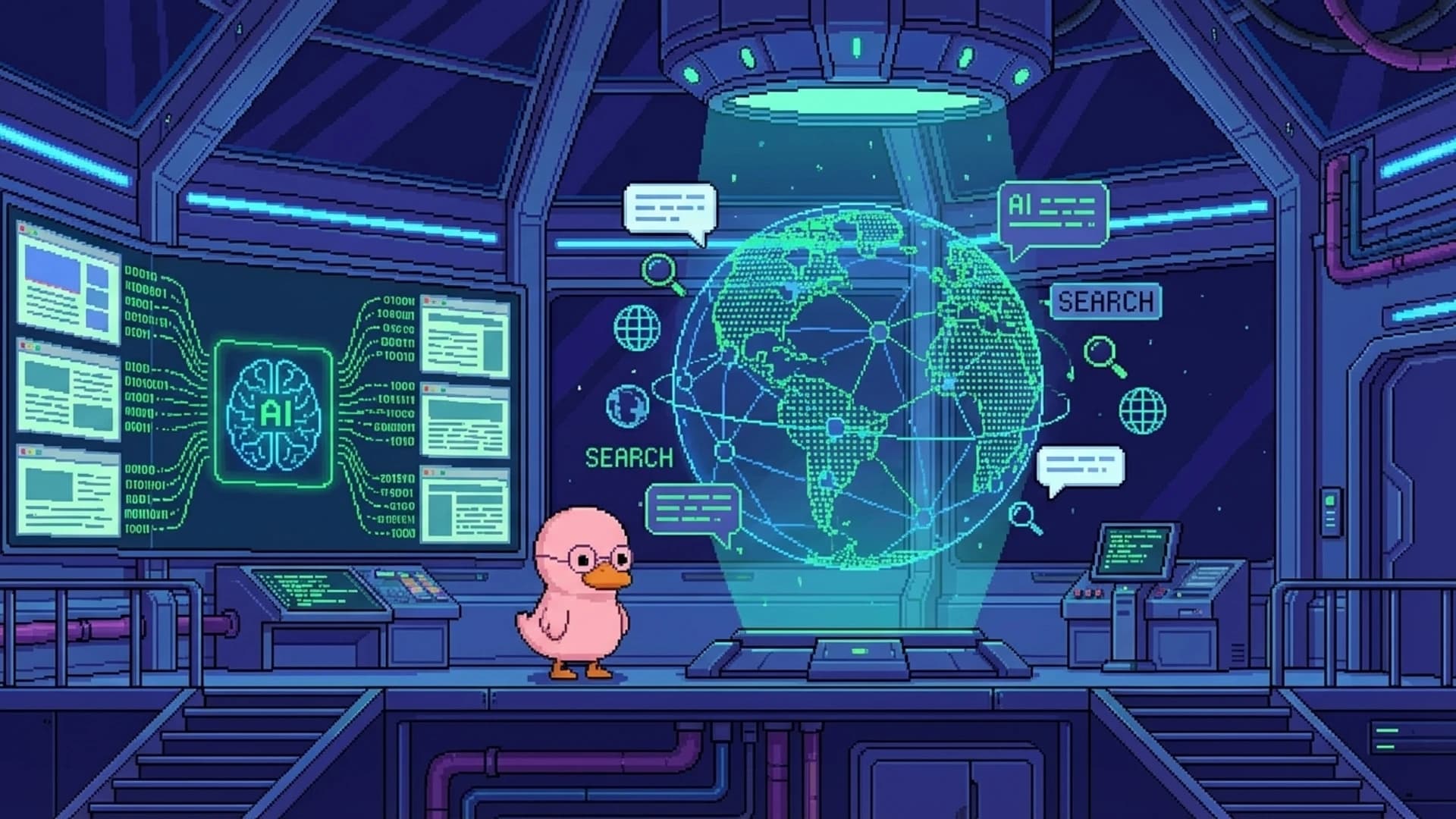
Your buyers are Googling less and asking ChatGPT more. When they do, ChatGPT doesn't show them ten blue links. It gives them one answer and cites a few sources. GEO is how you become one of those sources. Search volume for "what is GEO" has exploded 514% year-over-year, and the reason is simple: ChatGPT handles 37.5 million queries per day, Perplexity processes 100 million per month, and Google AI Overviews now appear on roughly 30% of searches. If your content isn't built for this, you're invisible to a fast-growing channel.
GEO (generative engine optimization) is how you get AI search engines to cite your content. Princeton/IIT Delhi research shows the right techniques boost AI visibility by up to 40%. Google's VP of Search says "GEO is really just SEO." He's half right. The foundations overlap, but the presentation layer is different. If your buyers research in AI tools and you're not getting cited, you don't exist to them.
What You'll Learn
- What GEO actually means (and why it has nothing to do with geography)
- Why Google's VP of Search says "GEO is just SEO" and where he's wrong
- The Princeton research that proved GEO boosts AI visibility by 40%
- How AI engines decide which pages to cite and which to ignore
- How ChatGPT, Perplexity, Google AI Overviews, and Claude pick sources differently
- A step-by-step playbook you can start using this week

What GEO actually is
GEO is about making your content easy for AI to find, understand, and quote. When someone asks ChatGPT "what's the best way to do X," you want your page to be the one it pulls from. These AI engines don't return a ranked list of links. They read multiple sources, mash the information together, and deliver one conversational answer with a few citations. Your goal isn't to rank. It's to be quotable.
Researchers at Princeton and IIT Delhi tested this in November 2023. They tried different ways of formatting content and measured what AI search engines actually picked up. The result: the right techniques improved visibility by up to 40%. Not a small edge. A fundamental shift in who gets cited. That paper turned GEO from a vague idea into something you can actually measure and improve.
And no, this has nothing to do with geography. If you searched "what is GEO" expecting the Greek prefix for "earth," you're not alone. Wikipedia still leads with that definition. But in marketing, GEO means something completely different now. It's reshaping how businesses get found online.

What Google actually thinks about GEO
“GEO is really just SEO. If you're making great content that's useful and helpful, you're already doing the right things.”
Google's John Mueller said something similar. Create helpful, well-structured content, and you're covered. From Google's perspective, AI Overviews pull from the same index and quality signals as organic search. If your page ranks well, it's likely to get cited in the AI Overview too.
They're not wrong. But they're not telling you everything. Google has every reason to downplay the idea that a new optimization discipline exists. Here's the reality: yes, 70-80% of what makes content perform in GEO overlaps with good SEO. But that remaining 20-30% matters. How you format quotable claims. How you structure data for extraction. How you signal authority for synthesis. That's where dedicated GEO work moves the needle. The Princeton paper proved it with data.
The balanced take
Don't abandon SEO for GEO. Don't ignore GEO because Google says it's "just SEO." The smart move is treating GEO as a presentation and structure layer on top of your existing SEO foundation. For a deeper comparison, see our full breakdown of <a href="/blog/geo-vs-seo">GEO vs SEO</a>.

How AI search engines pick what to cite
Every major AI search engine runs on something called retrieval-augmented generation (RAG). Think of it as a three-step filter. Your content can get knocked out at any stage.
1. Retrieval
Someone types a question. The AI searches its index for relevant pages using keyword matching, meaning similarity, and domain authority. It pulls together a shortlist of 10-50 pages. If your page doesn't make this shortlist, nothing else matters. This is why SEO is the foundation of GEO. You need to be in the candidate set first.
2. Selection and extraction
Now the AI reads those pages and decides which sections to actually quote. This is where GEO optimization matters most. The model is looking for direct answers to the question, numbers backed by evidence, perspectives it can't find everywhere else, and clean formatting that makes extraction easy. Clear headings, bullet points, FAQ sections. If your content reads like a wall of vague prose, it gets skipped.
3. Synthesis and citation
The AI combines information from its selected sources into one cohesive answer with inline citations. It's choosing between competing claims from different pages. The source with the most specific, well-supported statement wins. Vague, hedging language like "it could be argued that" gets dropped in favor of direct claims from other sources. Be definitive or get replaced.
How each AI platform picks sources differently
Not all AI search engines work the same way. Each one retrieves, evaluates, and cites content differently. Here's what you need to know about the big four.
ChatGPT Search
ChatGPT Search handles over 150 million queries per week. It's powered by Bing's index. It retrieves pages, reads them, and generates responses with clickable source citations. It favors authoritative domains, recent content, and pages that answer the question right in the first paragraph. If your opening is a 200-word anecdote, you've already lost.
Perplexity
Perplexity is the most transparent of the bunch. It shows numbered citations inline, links directly to your page, and lets users see exactly which passages were extracted. With 100+ million queries per month and a research-heavy user base, it rewards clear section headings, numbered lists, and hard numbers. The bonus: you can see which of your paragraphs got cited and reverse-engineer what worked.
Google AI Overviews
Google AI Overviews appear on roughly 30% of searches. Unlike ChatGPT and Perplexity, they pull from Google's own index. That means traditional SEO signals matter more here than anywhere else. Pages that rank in the top 10 organically are far more likely to be cited. Google also heavily weights structured data. FAQ schema, HowTo schema, and author markup all increase your odds.
Claude
Claude mostly draws from training data rather than live web searches, which makes it harder to optimize for directly. But it's showing up in more enterprise apps that do include web retrieval. The best way to get cited by Claude: be a widely referenced, authoritative source that ends up in training data. Which circles right back to GEO fundamentals.

See how duqky's Content Worker handles GEO optimization automatically — structured data, FAQ sections, citation formatting, and extraction-ready content built into every article.
See how it works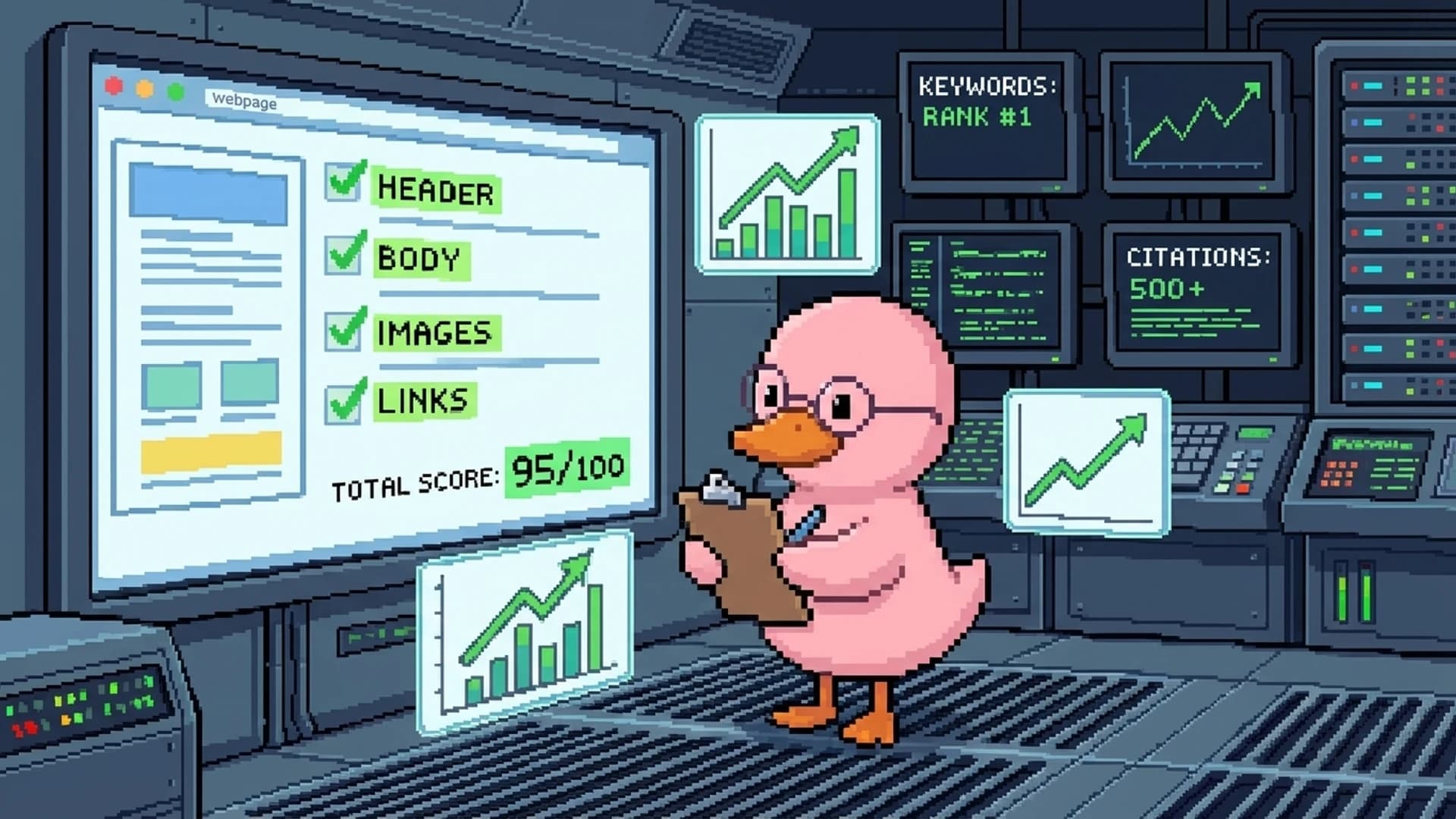
How to optimize for GEO: step by step
Here's the practical part. These are the optimizations that actually move the needle, ranked by impact. If you're a SaaS founder, start here. Most GEO guides are written by agencies that have never had to get their own product cited. This one isn't.
1. Lead every page with a direct, quotable definition
AI engines want the answer first, context second. The page that opens with a clean one-sentence definition gets cited. The page that opens with a 200-word anecdote gets skipped. For your key pages like glossary entries, comparison pages, and feature explanations, put a clear definition in the first sentence. Then elaborate.
2. Add real numbers, not vague claims
The Princeton study showed statistics improved AI visibility by up to 30%. But not just any statistics. The data has to be specific and verifiable. "Email marketing has high ROI" is useless. "Our 340 SaaS customers averaged 4.2x ROI on content spend in 2025" is citation gold. Use your own product data, customer metrics, and benchmarks. The more specific, the more quotable.
3. Cite authoritative sources and include expert quotes
This was the single most impactful optimization the Princeton researchers tested. Adding authoritative citations improved visibility by up to 40%. Cite named researchers. Link to primary sources. Include direct quotes from recognized experts. For SaaS content, that means industry analysts, peer-reviewed studies, or official platform documentation.
4. Use descriptive headings and FAQ sections
AI engines extract information by section. Clear H2 and H3 headings that describe what's below them make extraction easy. Vague headings like "Our Approach" are harder for AI to parse than "How AI search engines select sources." Add FAQ sections that mirror the questions people actually ask. They do double duty for featured snippets and AI extraction.
5. Build topical authority with content clusters
AI engines don't just evaluate individual pages. They check whether your domain has deep authority on a topic. A single blog post about GEO is less likely to be cited than a domain with a pillar page on <a href="/blog/generative-engine-optimization">generative engine optimization</a>, spoke articles on <a href="/blog/geo-vs-seo">GEO vs SEO</a> and <a href="/blog/ai-search-optimization">AI search optimization</a>, and related technical content. Build clusters of 5-10 interlinked articles around your core topics.

What GEO costs and whether it's worth it
If you're already doing SEO, GEO isn't a second program. It's a layer on top. The extra work per article: 30-60 minutes for data research and citation sourcing, 15-30 minutes for FAQ creation, 15 minutes for schema markup, and 15 minutes for an extraction-readiness review. That's 1-2 hours per article on top of your existing process. At agency rates, roughly $150-$300 per article.
AI content agents handle most of this automatically. Structured data, FAQ generation, citation formatting, heading optimization. All systematic tasks that agents are built for. The cost drops to single-digit dollars per article when you automate. That's why we built duqky's Content Worker to handle GEO optimization as part of the standard pipeline.
- Search target keywords weekly in ChatGPT, Perplexity, and Google — track whether your brand is cited
- Monitor Perplexity citations directly — numbered sources let you track frequency over time
- Track branded search volume — AI citations drive downstream brand queries
- Check referral traffic from AI platforms in your analytics (chat.openai.com, perplexity.ai)
- Use tools like Otterly.ai, Profound, or Peec AI for automated AI visibility tracking

Why this matters more for SaaS than anyone else
SaaS buyers are power users of AI tools. Your developers use ChatGPT daily. Your product managers run competitive analysis in Perplexity. Your CTO asks Claude to evaluate technical architectures. When your product isn't cited in AI responses for your category, you're invisible to exactly the people who buy software through research, not ads.
The economics make sense too. A single AI citation in a "best [your category] tools" response can drive as much qualified traffic as a position-3 organic ranking. And it costs you nothing after the initial optimization. Unlike paid search, AI citations compound. Once your content is authoritative enough to be cited, it keeps getting cited as retrieval indices update.
The risk of ignoring this is just as clear. If a competitor is consistently cited and you're not, that gap compounds. Your buyers form impressions before they ever visit your site. If ChatGPT recommends three tools in your category and yours isn't one of them, you've lost the deal before it started.
Frequently asked questions about GEO
GEO stands for generative engine optimization. It's how you get AI search engines like ChatGPT, Perplexity, and Google AI Overviews to cite your content in their answers. Nothing to do with geography.
About 70-80% of the work overlaps. Both reward authoritative, well-structured content. The difference is in the last 20-30%. GEO focuses on making your content easy for AI to extract, evaluate, and quote. SEO focuses on ranking in a list of links. You need both.
Start with what you already have. Lead your pages with clear definitions. Add real statistics. Include expert citations. Use descriptive headings. Add FAQ sections. Implement schema markup. Build clusters of related content. The Princeton study showed these techniques can boost AI visibility by up to 40%.
No. Google still processes 8.5 billion searches per day. GEO sits on top of SEO, not instead of it. Even Google's VP of Search says "GEO is really just SEO." You don't pick one. You layer them.
The tooling is still early. Otterly.ai and Peec AI track AI visibility. Perplexity shows you which of your pages get cited. Traditional SEO tools handle keyword research. Schema generators help with structured data. And AI content agents like duqky automate most of the optimization automatically.
It's the practice of structuring your content so AI search engines are more likely to find it, cite it, and surface it in their answers. The term was formalized in a 2023 research paper from Princeton and IIT Delhi.

duqky's Content Worker handles GEO optimization automatically — structured data, FAQ sections, citation formatting, and extraction-ready content in every article. Stop manually optimizing and let the agent handle the systematic work.
Get started free